Travel Advice

Your Cruise Preparation Companion

Prepare for your sea journey with our comprehensive guides covering planning, packing, health, safety and budgeting. Written by experienced cruise journalists, every article is updated regularly with the latest information so you can board with confidence.

A majestic cruise ship sailing on calm ocean waters, rendered in black-and-white halftone
Preparing for departure

Planning Your Cruise

Planning Your Cruise

Choosing the Right Cruise

Consider destination, duration, ship size and onboard amenities to match your preferences. Research itineraries and ports of call, compare ship classes and cabin types, and read reviews from other cruisers. A smaller expedition ship may suit remote coastlines, while a large resort vessel offers more dining and entertainment choices.

  • Match the itinerary to your interests, not just the ship's name.
  • Compare cabin locations and sizes before booking.
  • Look for recent passenger reviews that mention service and food.

Booking Timeline

Book early to secure the best cabins and prices, but be aware of cancellation policies. Early booking often offers discounts, while last-minute deals can be found for flexible travellers. Consider travel insurance at the time of booking so you are covered if plans change.

  • Six to twelve months ahead gives the widest cabin choice.
  • Watch for wave-season promotions between January and March.
  • Read cancellation terms before paying a deposit.

Understanding Cruise Costs

Know what is included in your fare and what will cost extra. Inclusions vary by cruise line, but common extras include drinks, specialty dining and shore excursions. Budget for gratuities as well, because many lines add them automatically to your onboard account.

Hidden costs to watch: bottled water, Wi-Fi packages, spa treatments, casino play, laundry and premium coffee. Check your fare summary carefully.
Packing Essentials

Packing Essentials

Clothing and Footwear

Pack for varied weather and formal nights, and bring comfortable walking shoes for shore excursions.

  • Layers for changing temperatures at sea and in port.
  • Formal attire if your cruise line requires it.
  • Swimwear and cover-ups for pool and beach days.

Toiletries and Medications

Bring essential toiletries and any prescription medications, plus seasickness remedies.

  • Travel-sized toiletries to save space.
  • Prescription medications in original containers.
  • Seasickness bands or medication, even if you rarely need them.

Documents and Money

Keep passports, visas, cruise tickets and payment methods organised and accessible.

  • Passport and visa copies stored separately.
  • Cruise documents and boarding passes printed or saved offline.
  • Credit cards and some local currency for ports.

Electronics and Entertainment

Bring chargers, adapters and entertainment for downtime.

  • Power adapters for ship outlets.
  • E-readers or books for sea days.
  • Camera and accessories for shore excursions.
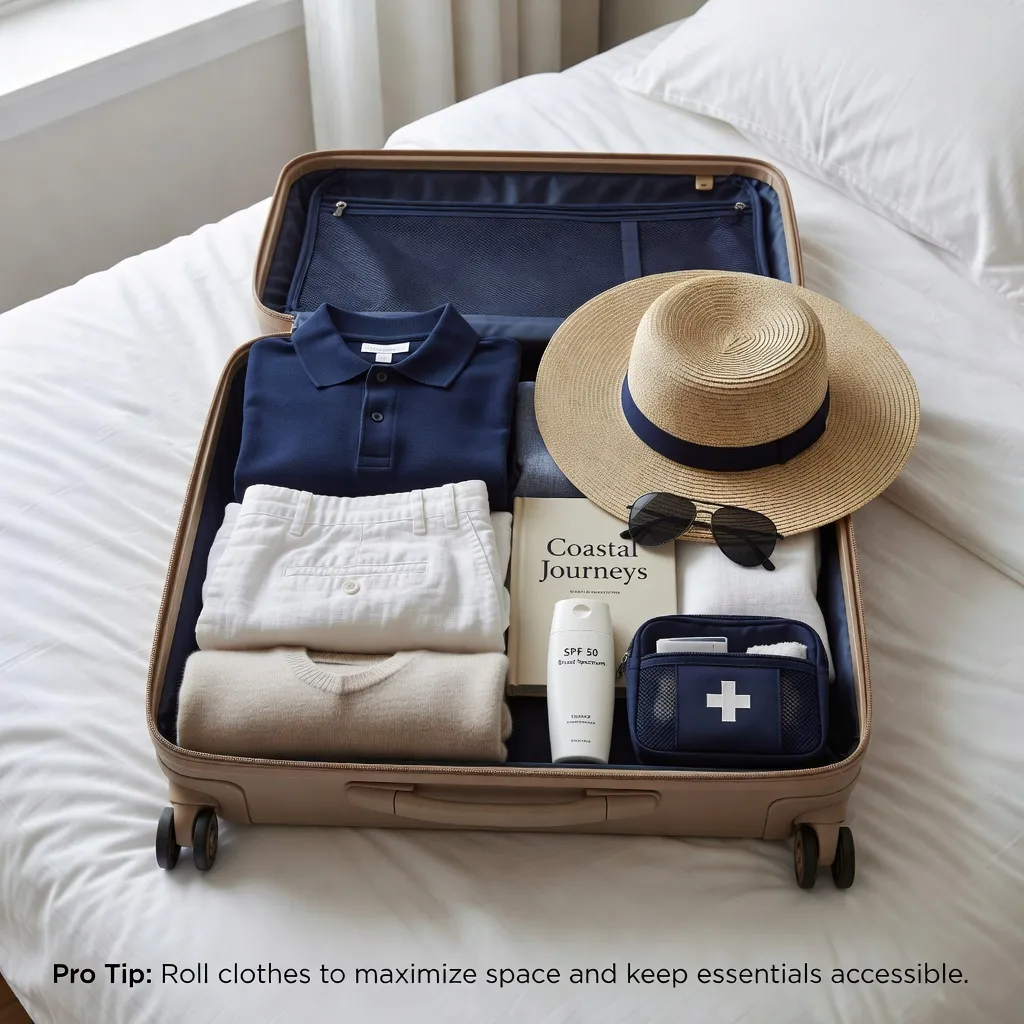
An overhead view of a neatly packed suitcase with folded clothes, sun hat, sunglasses, book, sunscreen and a small first-aid kit
Essentials ready for boarding

Health and Safety at Sea

Health and Safety at Sea

Seasickness Prevention

Learn how to prevent and manage seasickness with medication, natural remedies and cabin selection. Choose a midship cabin on a lower deck, use acupressure bands or medication, and stay hydrated while avoiding heavy meals. Fresh air on deck often helps more than staying in your cabin.

Onboard Medical Facilities

Know what medical services are available onboard and when to seek help. Ships have medical centres with basic care, but they are not full hospitals. Bring enough prescription medication for the entire voyage and consider travel insurance with medical coverage.

Safety Drills and Emergency Procedures

Participate in muster drills and familiarise yourself with emergency exits. Muster drills are mandatory, so know your assembly station and follow crew instructions in emergencies.

Budgeting for Your Cruise

Budgeting for Your Cruise

Understanding Fare Inclusions

Know what your cruise fare covers and what additional costs to expect. Fare typically includes accommodation, meals and entertainment, but extras include drinks, specialty dining, shore excursions and gratuities. Some cruise lines offer all-inclusive packages that bundle many of these costs.

Included Often Extra
Main dining room meals Specialty restaurants
Basic entertainment Alcoholic drinks
Pool and gym access Shore excursions

Saving on Shore Excursions

Explore ports independently or book excursions in advance to save money.

  • Research free activities in port before you arrive.
  • Book excursions early for discounts.
  • Consider group tours for better rates.

Managing Onboard Spending

Set a daily spending limit and monitor your onboard account. Use the ship's app to track expenses, avoid impulse purchases and take advantage of included dining options.

Documentation and Insurance

Documentation and Insurance

Passports and Visas

Ensure your passport is valid for at least six months beyond your return date and check visa requirements. Check entry requirements for each port, because some countries require visas even for cruise passengers. Keep copies of documents in a separate bag.

  • Passport with six months validity.
  • Visa for every port that requires one.
  • Printed and digital copies of all documents.

Travel Insurance

Purchase comprehensive travel insurance that covers medical emergencies, trip cancellation and lost luggage. Check coverage for cruise-specific issues, consider 'cancel for any reason' policies, and declare pre-existing conditions to avoid claim rejection.

Important: Standard travel insurance may not cover medical evacuation at sea. Look for a policy that explicitly includes cruise coverage.

Health Documents

Bring vaccination records and any required medical certificates.

  • Check vaccination requirements for destinations.
  • Carry a list of medications and dosages.
  • Inform the cruise line of special needs in advance.

Onboard Etiquette and Tips

Onboard Etiquette and Tips

Dining Etiquette

Understand dress codes and dining room manners. Follow the dress code for formal nights, be punctual for assigned dining times and tip appropriately for exceptional service.

Cabin Courtesy

Be considerate of neighbours and crew.

  • Keep noise levels down, especially on balconies.
  • Respect crew-only areas.
  • Keep balcony doors closed when not in use.

Making the Most of Onboard Activities

Plan your days to enjoy shows, lectures and recreational facilities. Check the daily schedule, book popular activities early and try new experiences.

Frequently Asked Questions

Frequently Asked Questions

What is the best time to book a cruise?

Book 6-12 months in advance for the best selection and prices, or look for last-minute deals if flexible. Wave season from January to March often has promotions, shoulder seasons offer lower prices, and you can monitor price drops after booking.

Do I need a passport for a cruise?

Yes, most international cruises require a passport valid for at least six months beyond your return date. Some domestic cruises may accept other ID, but check specific requirements for your itinerary and apply for a passport well in advance.

What should I do if I get seasick?

Use seasickness medication, acupressure bands or natural remedies, and choose a midship cabin on a lower deck. Consult a doctor for prescription options, stay hydrated, eat light meals and get fresh air on deck.

Are gratuities included in the cruise fare?

It varies by cruise line; some include gratuities, while others add them automatically to your onboard account. Check your cruise line's policy, budget for gratuities if not included, and you can adjust gratuities at guest services.

What is the dress code for formal nights?

Formal nights typically require cocktail dresses or gowns for women and suits or tuxedos for men, but some cruise lines are more casual. Check your cruise line's guidelines, rent formal wear onboard if needed, and note that some ships have multiple formal nights.